Knowledge & Glossary


Terms Related to Colloidal Fertilization
A brief explanation of the technical terms used in our product descriptions and test reports.
Agrobacterium tumefaciens
A flagellated bacterium that spreads on its own through irrigation systems. It causes "crazy roots" in tomatoes and cucumbers, as well as crown gall in roses.
Bacteria
Microorganisms with their own metabolism that reproduce through cell division. In horticulture, they cause plant diseases but also form a beneficial part of the soil microflora.
Biostimulant
A separate product category under the EU Fertilizer Regulation: a fertilizer product that stimulates plant nutritional processes regardless of its nutrient content. Legally distinct from a plant fortifier.
Bioavailability
The proportion of a nutrient that a plant can actually absorb and utilize. Generally, the finer the particle, the higher the bioavailability.
Foliar Fertilization
Application of nutrients via the leaf surface rather than through the soil or irrigation. Absorption occurs more quickly, and the required amounts are smaller.
Boron
A trace nutrient that regulates flower formation and fertilization. A deficiency is particularly evident during the reproductive phase, resulting in poor fruit set.
CEA – Controlled Environment Agriculture
Technology-based cultivation in an environment isolated from the outside world—known as greenhouse cultivation. Vertical farming also falls under this category.
CGMMV
The Cucumber green mottle mosaic virus, often referred to as the cucumber mosaic virus: a highly contagious, very resilient plant virus for which there is no curative treatment.
Chlorosis
A deficiency symptom in which the leaves become lighter in color or turn yellow, while the leaf veins remain green. The most common causes are iron, magnesium, or copper deficiencies.
Clavibacter michiganensis
A bacterium that causes bacterial wilt and bacterial canker in tomatoes, among other crops. It can be identified by one-sided wilting and corky, bird's-eye-like spots on the fruit.
Crazy Roots
A disease caused by Agrobacterium tumefaciens characterized by excessive root growth. Despite the increase in root mass, the plants stop absorbing water and wither.
Fertilizer
According to the EU regulation, a product intended to supply plants with nutrients or to improve their nutrient use efficiency.
Effective Microorganisms
Abbreviation: EM—a mixture of aerobic and anaerobic microorganisms, primarily lactic acid bacteria, yeasts, and photosynthetic bacteria. Used for soil revitalization.
Iron
An essential trace element that is indispensable for chlorophyll synthesis in plants. If the iron content falls below a critical minimum, the green parts of the plant turn yellow.
EU Fertilizer Regulation
Short name for Regulation (EU) 2019/1009 on the making available of fertilizer products on the EU market. B+H Solutions' products comply with this regulation.
Fertigation
Application of fertilizers through the irrigation system. This ensures a uniform supply of water and nutrients without any additional effort.
Fusarium oxysporum
A soil-dwelling fungus that causes Fusarium wilt. It can survive for many years, which is why infected plants should be disposed of separately.
Taste
The sensory experience when eating the fruit depends heavily on its degree of ripeness at harvest. It is created by a balanced sugar-to-acid ratio and secondary plant compounds.
Greenhouse
Extends the growing season and protects sensitive plants from wind and cold. Modern glass greenhouses in Europe can cover many hectares.
Shelf Life
In the case of flowers, this is also known as “vase life.” It is often influenced by ethylene, which, as a ripening hormone, accelerates the ripening, yellowing, and wilting of flowers.
Jordan virus
Abbreviation for the Tomato brown rugose fruit virus (ToBRFV). It can infect up to 100% of a greenhouse crop in a single growing season.
Cold fogging
Apply as a fine mist without applying heat. In the greenhouse, the active ingredient is distributed evenly throughout the entire crop.
Colloidal Fertilizers
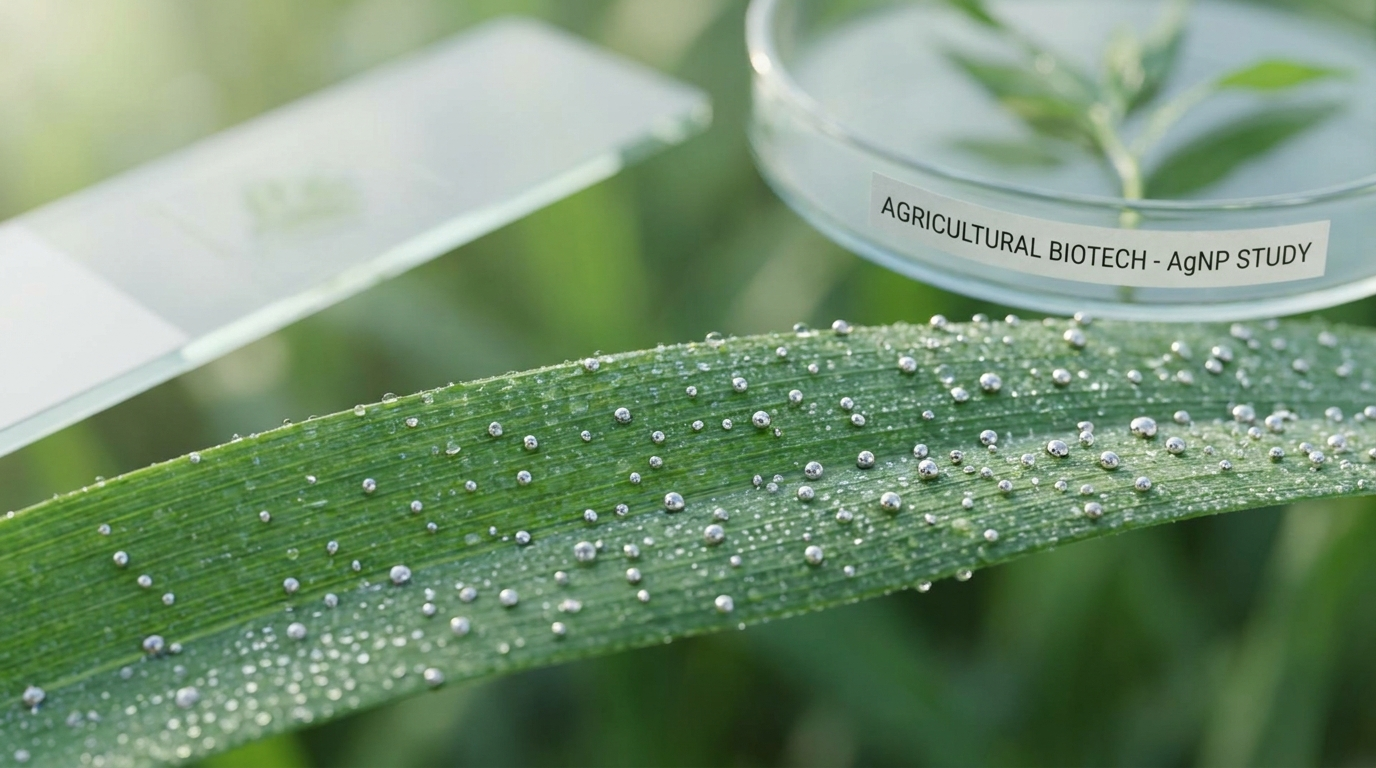
Colloids are tiny particles ranging in size from 1 to 1,000 nanometers, finely dispersed in a liquid. Colloidal fertilizers are absorbed directly through the leaves and roots and supplement the existing fertilization regimen.
Copper
A soft semi-precious metal and an essential micronutrient. Copper is effective against microbes, especially fungi, and is often used as a fungicide in organic farming.
Powdery Mildew
Caused by fungi. Powdery mildew forms a white coating on the upper surface of the leaf that can be wiped off, while downy mildew forms a coating on the underside that cannot be wiped off.
nanometer
One millionth of a millimeter. The particles in AgroArgentum® are less than 30 nm in size—small enough to be absorbed directly through the leaf surface.
Nanotechnology
A high-quality nanomaterial is characterized by five properties: particle size, particle size distribution, purity, stability, and reproducibility.
NK content
Specification of the nitrogen and potassium content of a formulation. An NK ratio of 9-6 indicates 9% nitrogen and 6% potassium.
Organic Farming
A resource-efficient form of agriculture based on the principles of the circular economy, without synthetic pesticides, mineral fertilizers, or genetic engineering.
Particle Size Distribution
The most important quality parameter for nanoparticles: The particles should not only be small, but also exhibit only minor differences in size.
Plant Fortification
Measures that promote the plant's natural resilience—for example, through improved nutrient supply, stronger root growth, and more robust cell walls.
Plant fortifier
A legally defined term pursuant to Section 2, No. 10 of the Plant Protection Act: Substances and mixtures used exclusively for the general maintenance of plant health.
Photosynthesis
The plant's central metabolic process: light energy is converted, oxygen is produced from water, and sugars are synthesized from carbon dioxide.
Phytoplasma
Bacteria without cell walls that can survive only within their host plants. In sugar beets, they cause the disease SBR, which results in so-called "rubber beets."
Ralstonia solanacearum
A bacterium that clogs the plant's xylem and causes wilting. Under warm, humid conditions, yield losses of 35 to 90 percent are possible.
No residue
Crop produce in which no detectable residues of active ingredients remain, in accordance with the applicable limits.
Silver
A precious metal with the highest electrical and thermal conductivity of all elements; it is also antibacterial and antiviral. In plant cultivation, it enhances photosynthesis when used in particle form.
Trace nutrients
Also known as micronutrients: nutrients that plants need only in very small amounts, but cannot do without. A lack of these nutrients results in deficiency symptoms.
Compatibility Test
A small-scale test prior to the first large-scale application. It determines whether the products can be mixed with the chemicals used at the facility.
Viruses
Much smaller than microorganisms and lacking their own metabolism. They reprogram plant cells to turn them into production factories for new viruses.
Xanthomonas campestris
A plant-pathogenic bacterium that causes severe damage to many crops worldwide. It grows best under warm, humid conditions above 20 °C.
Cell wall
External structure of the plant cell. Calcium and silicon are incorporated into it, making the tissue stronger—as evidenced by the longer shelf life of the harvest.
Sugar content
One of the most important indicators of quality in fruits and vegetables, measured in Brix degrees. It directly affects taste and market value.
B+H Solutions in the Press
Articles about our work from trade publications and news agencies. The links lead to the respective original articles.